Oura Ring Gen 4 Review: Sleep Stage Accuracy Analyzed
Anúncios
Oura Ring Gen 4 sleep accuracy is an important consideration for people who use wearable technology to understand their nighttime rest. The device estimates sleep duration and stages through physiological signals.
Monitoring sleep over 90 consecutive nights can reveal patterns that shorter observation periods may overlook. However, long-term tracking alone does not establish clinical accuracy.
This review examines sleep stage detection, sensor technology, user experience, and practical interpretation. It also explains the evidence needed to compare consumer wearables with medical sleep assessments.
Unpacking Oura Ring Gen 4 Sleep Accuracy Claims
The Oura Ring 4 is designed to monitor sleep and other physiological measurements. Its features include estimates of light, deep, and REM sleep.
Understanding Oura Ring Gen 4 sleep accuracy requires distinguishing the device's estimated measurements from directly observed brain activity. Wearable sensors cannot measure sleep stages in the same way as clinical equipment.
These estimates may provide useful information about personal sleep patterns. However, individual results depend on sensor quality, algorithm performance, and physiological differences.
Methodology: Evaluating 90 Nights of Sleep Data
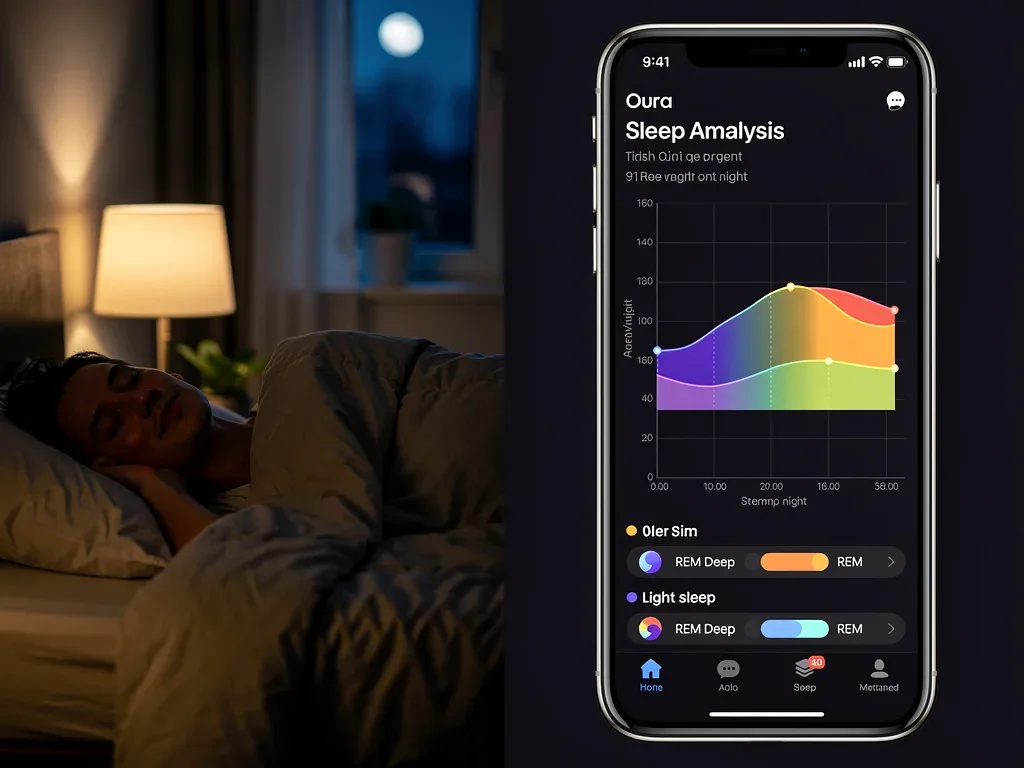
A 90-night monitoring period offers an opportunity to examine the consistency of sleep measurements. Repeated observations can highlight changes in sleep timing and duration.
For a rigorous assessment of Oura Ring Gen 4 sleep accuracy, researchers would need synchronized data from an appropriate clinical reference, such as polysomnography.
The original article did not provide a verifiable dataset from such an investigation. Therefore, the following methodology describes how a controlled comparison could be conducted.
Comparing Oura Data to Polysomnography
Polysomnography records physiological signals, including brain activity and eye movements, to help identify sleep stages. It is commonly used in clinical sleep assessments.
A study of Oura Ring Gen 4 sleep accuracy could compare wearable estimates with scored polysomnography recordings. Each sleep stage would require an appropriate statistical assessment.
Researchers should report participant characteristics, recording conditions, missing data, and classification performance. Without these details, accuracy claims cannot be independently evaluated.
Data Collection: Obtain synchronized recordings from the wearable and clinical reference equipment.
Participants: Document age ranges, health characteristics, and relevant sleep patterns.
Duration: Define the number of nights and determine how many include valid reference measurements.
Key Metrics: Evaluate agreement, sensitivity, specificity, and sleep stage classification.
Understanding Light, Deep, and REM Sleep Detection
Sleep consists of different stages associated with changing physiological activity. Consumer wearables estimate these stages from signals such as movement and cardiovascular measurements.
Oura Ring Gen 4 sleep accuracy may differ depending on the stage being estimated. Identifying periods of sleep does not necessarily mean every stage is classified correctly.
For this reason, stage-specific results should be interpreted cautiously. Reliable conclusions require validation data rather than assumptions based on an appealing sleep graph.
Deep Sleep Accuracy and Its Limitations
Deep sleep, also called N3 sleep, is associated with slow-wave brain activity. It plays a role in several physiological processes related to rest and recovery.
Evaluating Oura Ring Gen 4 sleep accuracy for deep sleep requires comparison with a suitable reference method. The device's displayed duration is an estimate.
Users may observe changes in reported deep sleep over time. However, a single low reading does not establish a health problem or confirm insufficient recovery.
REM and Light Sleep Classification
REM sleep involves characteristic brain activity and rapid eye movements. Light sleep includes stages that differ from both deep sleep and REM sleep.
When assessing Oura Ring Gen 4 sleep accuracy, researchers must examine how frequently the algorithm confuses these categories. Similar sensor patterns may contribute to classification errors.
Wearable estimates can still support an overview of nighttime patterns. They should not be treated as precise measurements of every sleep stage transition.
Implications for Daily Health Monitoring
Sleep trackers can help users become more aware of their routines. Information about sleep timing and estimated duration may encourage consistent habits.
The practical value of Oura Ring Gen 4 sleep accuracy depends partly on how users interpret the results. Long-term patterns can be more informative than isolated readings.
However, wearable measurements should complement personal observations rather than replace them. Persistent sleep concerns deserve evaluation by a qualified healthcare professional.
How Oura Ring Data Influences User Behavior
Daily sleep information may encourage users to review bedtime consistency and recovery habits. Tracking changes can support greater awareness of lifestyle patterns.
Understanding Oura Ring Gen 4 sleep accuracy helps prevent excessive confidence in individual measurements. Sleep scores combine information through proprietary calculations.
These scores can be useful as general indicators, but they are not clinical diagnoses. Personal symptoms and overall well-being remain important considerations.
Sleep Duration: Compare estimated nighttime rest across several days.
Trend Analysis: Observe recurring patterns instead of focusing on isolated fluctuations.
Readiness Score: Consider the app's combined recovery estimate without treating it as a medical result.
Personalized Insights: Evaluate suggestions alongside individual circumstances and professional guidance when necessary.
User Experience and Data Interpretation
The Oura application presents sleep information through charts, summaries, and daily scores. These features can make personal data easier to review.
For consumers researching Oura Ring Gen 4 sleep accuracy, the clarity of the application matters alongside measurement performance. Useful information should be understandable without specialized knowledge.
Readers can also explore broader discussions about fitness tracker sleep accuracy to understand why different wearable devices may produce different estimates.
Reading Sleep Scores Without Overinterpreting Them
A sleep score summarizes multiple measurements into a simplified indicator. It can help users recognize patterns but may conceal uncertainty in individual estimates.
When considering Oura Ring Gen 4 sleep accuracy, compare the score with reported sleep duration, bedtime consistency, and how rested you feel.
Repeatedly checking minor fluctuations may create unnecessary concern. A more balanced approach focuses on meaningful changes and persistent symptoms.
Comparing Oura Gen 4 to Previous Generations
The Oura Ring 4 introduced changes to the company's wearable hardware and sensing technology. These developments were intended to improve data collection and user experience.
However, better hardware does not automatically prove higher Oura Ring Gen 4 sleep accuracy. Direct comparisons require controlled testing under similar conditions.
Consumers should examine validated performance, device comfort, and ongoing costs. Comparing specifications alone may not establish which generation is more suitable.
Technological Advancements in Gen 4
The fourth-generation ring includes optical sensors and temperature measurement capabilities. These signals contribute to its broader physiological monitoring features.
The interpretation of Oura Ring Gen 4 sleep accuracy depends on both sensor information and software algorithms. Updates may influence how collected data is analyzed.
Battery performance and consistent overnight wear also matter for long-term tracking. Actual battery life varies with settings and usage conditions.
Optical Sensors: Collect cardiovascular signals used in several health-related estimates.
Temperature Measurements: Provide information about changes in nighttime physiological patterns.
Software Algorithms: Process sensor data to estimate sleep characteristics.
Battery Performance: Supports repeated monitoring when the device is charged and worn consistently.
Future Outlook for Wearable Sleep Tracking
Wearable sleep technology continues developing through improvements in sensors and data analysis. Consumer devices are increasingly capable of collecting physiological measurements over extended periods.
Future developments may influence Oura Ring Gen 4 sleep accuracy and the performance of subsequent products. However, improvements must be demonstrated through appropriate validation studies.
The distinction between wellness tracking and medical diagnosis remains important. A consumer sleep tracker should not be assumed equivalent to clinical polysomnography.
Research and Validation Priorities
Future research can investigate how accurately wearable devices estimate sleep across different populations. Age, health status, and sleep disturbances may influence performance.
To evaluate Oura Ring Gen 4 sleep accuracy fairly, studies should disclose their methodology and limitations. Independent replication can strengthen confidence in reported findings.
Comparisons should also examine performance over time and across software versions. This helps determine whether improvements remain consistent beyond controlled laboratory conditions.
Recommendations for Oura Ring Gen 4 Users
People using the Oura Ring 4 can benefit from reviewing sleep trends over several weeks. Consistent patterns often provide more context than a single night's results.
Understanding the limitations of Oura Ring Gen 4 sleep accuracy is essential. Reported sleep stages should be regarded as estimates rather than definitive clinical measurements.
Users should also consider comfort, proper fit, and regular charging. These practical factors influence the quality and continuity of collected information.
Practical Tips for More Meaningful Sleep Tracking
Wear the ring according to the manufacturer's recommendations and maintain consistent measurement habits. Reliable contact can help reduce avoidable data collection problems.
When reviewing Oura Ring Gen 4 sleep accuracy, compare observations across multiple nights. Focus on broad changes instead of treating small differences as significant.
If sleep problems persist, seek professional medical advice. Wearable data may help describe patterns but should not determine diagnosis or treatment decisions independently.
Consistent Wear: Follow fit and usage recommendations for overnight tracking.
Long-Term Patterns: Compare weekly and monthly trends when sufficient data is available.
Personal Context: Consider sleep schedules, lifestyle changes, and how rested you feel.
Medical Guidance: Consult a qualified professional about persistent sleep difficulties.
Comparing Wearable Features Beyond Sleep
Sleep monitoring is only one feature offered by contemporary wearable devices. Many products also track activity, heart rate, and other wellness-related information.
Consumers researching Oura Ring Gen 4 sleep accuracy may also want to compare overall usability, battery life, and compatibility with their devices.
Other technology comparisons, such as this Garmin Fenix 8 review, can illustrate how wearable products prioritize different monitoring features.
Choosing Features That Match Your Needs
Some users prioritize sleep information, while others prefer exercise tracking or notifications. Identifying the intended purpose makes product comparisons more relevant.
The importance of Oura Ring Gen 4 sleep accuracy depends on how frequently sleep estimates influence personal decisions. Different users may value different measurements.
Consumers should also evaluate subscription requirements and available reports. A useful tracker combines appropriate features with understandable information.
Limitations of a 90-Night Observation Period
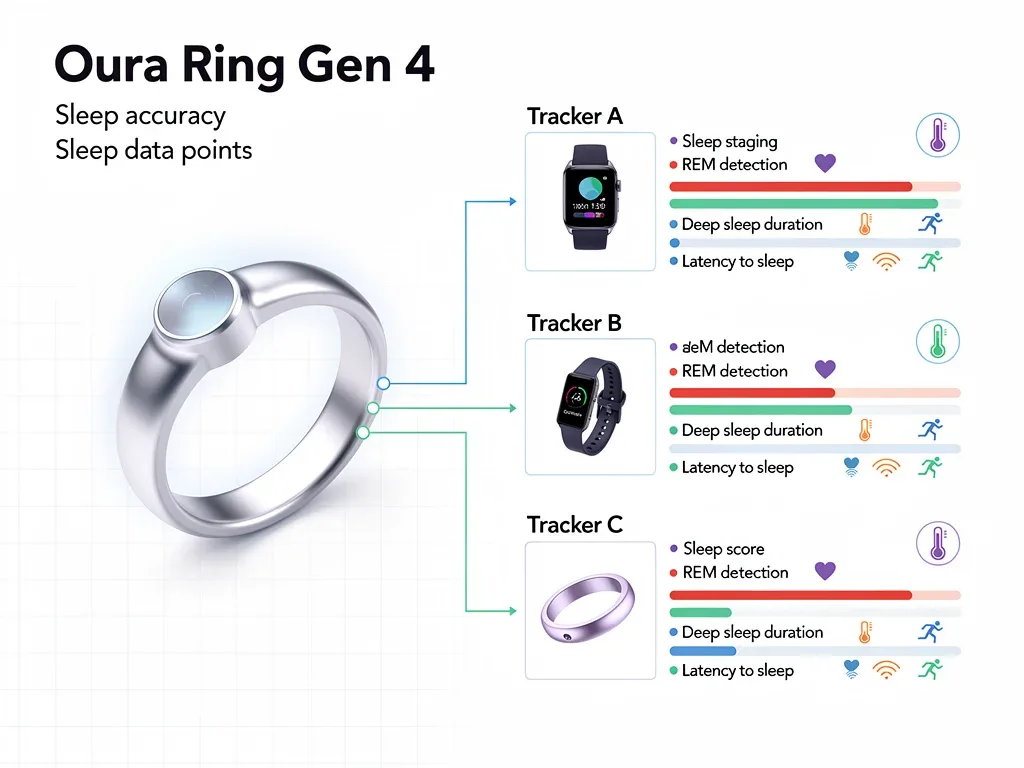
Ninety consecutive nights can provide an extensive record of one person's sleep patterns. However, duration alone cannot demonstrate that a wearable accurately identifies sleep stages.
Any claim about Oura Ring Gen 4 sleep accuracy based on a 90-night study requires methodological documentation. A reference standard and statistical results are essential.
Without those elements, observations should be described as personal tracking experiences. They cannot support precise claims about sensitivity, specificity, or clinical agreement.
What a Verified Study Should Report
A transparent study should state the number of participants and the number of valid recording nights. It should also explain how sleep stages were independently classified.
When evaluating Oura Ring Gen 4 sleep accuracy, readers should look for comparison statistics and uncertainty estimates. General descriptions such as highly accurate are insufficient.
Researchers should also describe missing observations and possible sources of bias. These details help readers understand which conclusions the evidence supports.
Participant Information: Number of participants and relevant characteristics.
Reference Measurements: Details about polysomnography or another validated method.
Performance Results: Reported agreement and stage-specific classification metrics.
Study Limitations: Missing data, measurement conditions, and potential biases.
Key Aspect | Summary of Findings |
|---|---|
Deep Sleep Accuracy | The device estimates deep sleep, but this article does not establish a verified 90-night agreement rate with polysomnography. |
REM/Light Sleep Accuracy | Classification performance requires stage-specific validation data before reliability can be quantified. |
Overall Sleep Metrics | Estimated duration and timing may help reveal trends, but individual measurements can differ from clinical results. |
User Recommendations | Focus on long-term trends, consider personal symptoms, and avoid treating wearable estimates as diagnoses. |
Frequently Asked Questions About Oura Ring Sleep Tracking
How accurate is the Oura Ring Gen 4 for deep sleep?▼
The Oura Ring 4 estimates deep sleep using physiological sensor information and software algorithms. However, this article does not provide verified results from a 90-night polysomnography comparison. Specific accuracy claims require published validation data.
Can the Oura Ring Gen 4 differentiate between light and REM sleep?▼
The device provides estimates for light, deep, and REM sleep. These classifications are inferred from physiological measurements rather than directly measured brain activity, so some sleep stages may be misclassified.
Is the Oura Ring Gen 4 a substitute for a medical sleep study?▼
No. The Oura Ring 4 is a consumer wearable used for health and wellness tracking. It does not replace clinical sleep studies or professional assessment when a sleep disorder is suspected.
How often should I check my Oura Ring sleep data?▼
Users can review their sleep information regularly, but longer-term patterns may be more helpful than individual readings. Small changes in daily scores do not necessarily indicate meaningful changes in health.
What factors can affect Oura Ring sleep accuracy?▼
Device fit, sensor contact, movement, individual physiological characteristics, and algorithm performance can affect measurements. Consistent wear and proper device maintenance may help reduce avoidable recording problems.
What This Means for Sleep Tracking
Oura Ring Gen 4 sleep accuracy remains an important consideration for consumers who want to understand their nighttime rest. The device offers useful estimates and organized reports.
However, a 90-night monitoring period should not be confused with a verified clinical study. Reliable conclusions require transparent methods and appropriate reference measurements.
As wearable technology continues evolving, consumers should prioritize credible evidence. Related technology reviews can also demonstrate the importance of documented testing methods.