KitchenAid 7-Quart Bowl-Lift Stand Mixer Review: Bread Dough Stress-Testing
Advertisements
Our review examines the KitchenAid 7-Quart Bowl-Lift Stand Mixer, focusing on its large-capacity design, 500-watt electrical power rating, bowl-lift stability, and suitability for demanding bread-dough preparation. The goal is to separate official specifications from assumptions about motor output and provide practical context for serious home bakers.
The KitchenAid 7-Quart Bowl-Lift focuses on one of KitchenAid’s larger residential stand mixers for bakers who regularly prepare substantial batches.
KitchenAid lists the current KSM70 with a 7-quart bowl, 11 speeds, a three-point bowl-locking system, and enough stated capacity to knead more than 8.5 pounds of bread dough.
Advertisements
Its 500-watt rating is useful as an electrical specification, but wattage alone should not be treated as a direct measurement of kneading strength or mechanical output at the bowl.
Understanding the KitchenAid 7-Quart Bowl-Lift Design
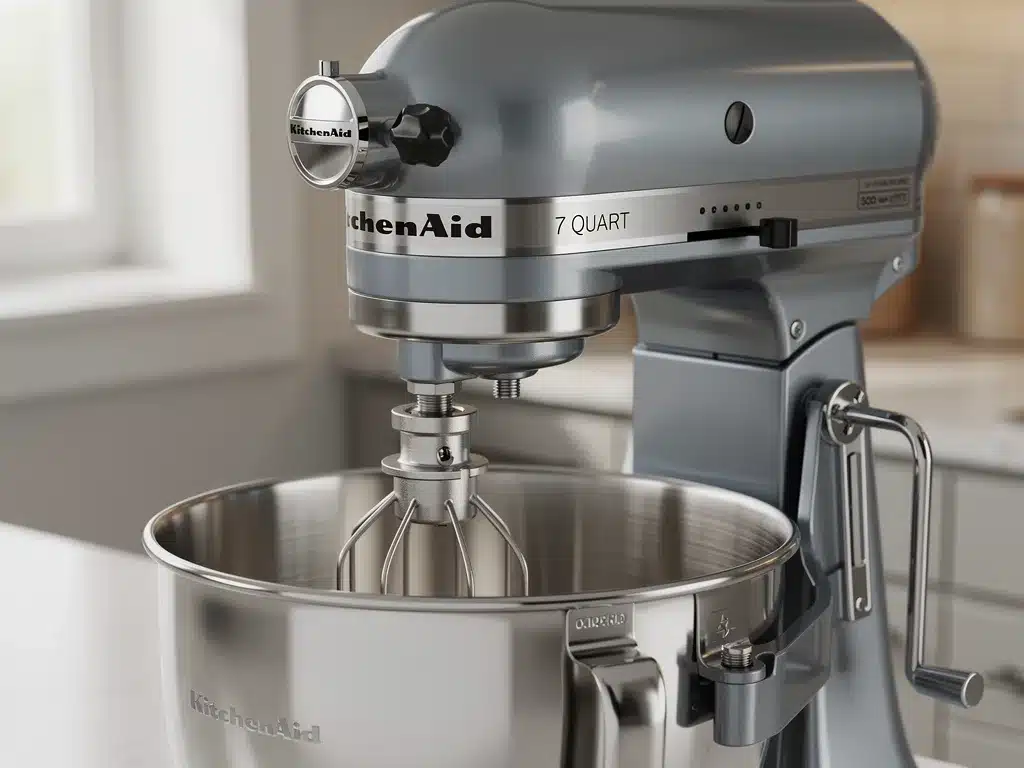
The KitchenAid KSM70 uses a bowl-lift configuration in which the stainless-steel bowl attaches to fixed support points rather than sitting beneath a tilting mixer head.
KitchenAid describes the system as a three-point locking bowl designed to provide additional stability while mixing dense or heavy ingredients.
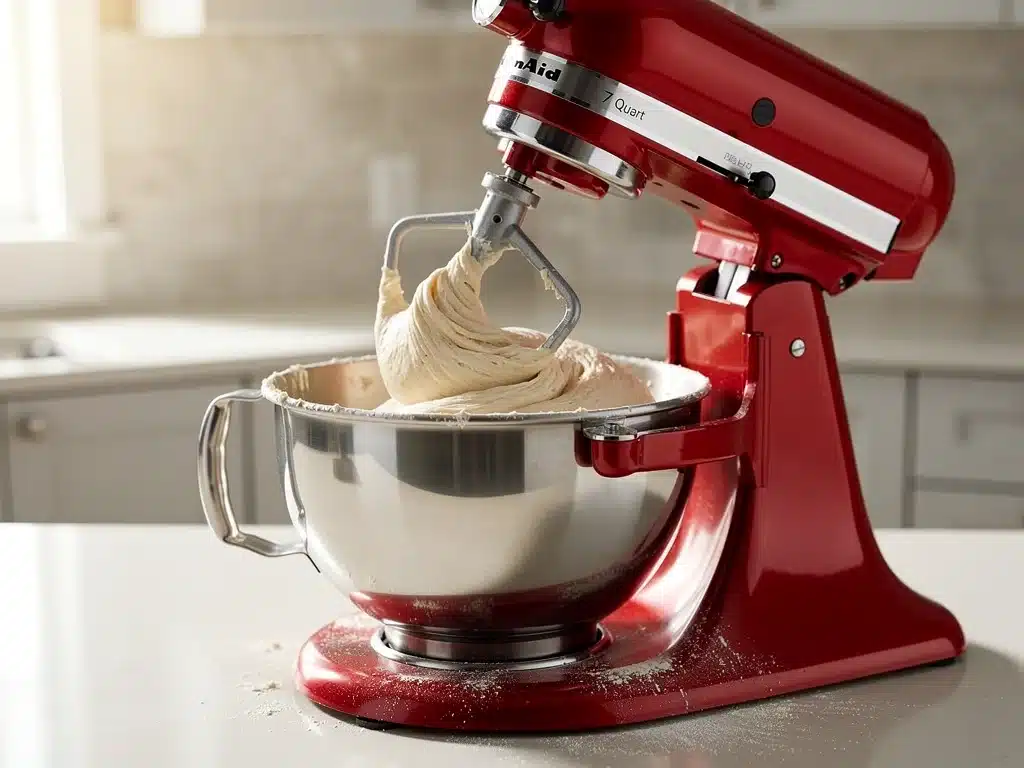
This layout is particularly relevant for bread preparation because stiff dough can place substantial resistance on the hook, bowl, and supporting structure.
Why Bowl-Lift Stability Matters for Dough
During kneading, dough repeatedly stretches around the spiral hook and can create noticeable movement in a mixer with a lighter support structure.
A securely locked bowl helps keep the mixing vessel positioned consistently while the hook works through large or resistant batches.
The design does not make every dough effortless, but it provides a stable platform intended for more demanding mixing than KitchenAid’s smaller tilt-head models.
Power and Performance: Understanding the 500-Watt Rating
The KSM70 family has been published with a 500-watt electrical power rating, but KitchenAid specifically cautions against using wattage as a simple measure of mixer performance.
Electrical input describes how the appliance interacts with the household electrical system and does not tell consumers exactly how much usable mechanical power reaches the dough hook.
For that reason, bowl capacity, torque delivery, gearing, mixer design, recommended speeds, and manufacturer-rated batch capacity are more useful when evaluating bread performance.
KitchenAid’s Current Performance Claims
KitchenAid currently describes the 7-quart bowl-lift model as delivering twice the power in the bowl of its KSM150 tilt-head mixer under the company’s stated test conditions.
The manufacturer also says the KSM70 can knead more than 8.5 pounds of bread dough, providing a more meaningful reference for bakers than wattage alone.
Those are manufacturer specifications rather than independent stress-test results, so actual performance can still vary with flour type, hydration, recipe, batch size, and kneading time.
Bread Dough Capacity in Real-World Use
A 7-quart bowl provides enough physical volume for large recipes, but bowl volume and safe dough capacity are not the same measurement.
KitchenAid currently advertises more than 8.5 pounds of bread-dough capacity for the KSM70, which is substantially more useful than assuming a fixed number of cups of flour works for every recipe.
Dense whole-grain dough, enriched brioche, high-hydration dough, and conventional sandwich bread can behave very differently even when their total ingredient weight is similar.
Why Hydration and Flour Type Matter
Low-hydration doughs can create high mechanical resistance because they are stiff, while wetter doughs may stretch and move around the bowl more freely.
Whole-grain flour can also absorb water differently from refined flour, changing how much resistance the mixer experiences as gluten develops.
Rather than automatically filling the bowl to its maximum stated capacity, bakers should adjust batch size according to the recipe and follow KitchenAid’s operating guidance.
Using the Spiral Dough Hook Correctly
The KSM70 includes a coated spiral dough hook intended for bread and other yeast-dough preparation.
KitchenAid’s guidance for bowl-lift mixers has historically emphasized using the designated dough hook and appropriate low kneading speeds for heavy dough.
Running dense dough faster does not necessarily improve gluten development and can increase unnecessary stress on the mixer and dough.
Watch the Dough Instead of the Clock Alone
Kneading time varies because recipes differ in flour strength, hydration, fat, sugar, temperature, and fermentation method.
A rigid rule such as kneading every dough for 10 or 15 minutes can therefore overwork some recipes while leaving others underdeveloped.
Use the recipe’s guidance alongside visual and tactile indicators such as elasticity, cohesion, surface texture, and gluten development.
Large Capacity Without Assuming Unlimited Loads
The 7-quart bowl is designed for large recipes, and KitchenAid advertises capacity for 13 dozen cookies, more than 8.5 pounds of bread dough, or more than 7.5 pounds of mashed potatoes.
Those figures demonstrate the scale of the mixer, but they do not mean every recipe can safely be enlarged until the bowl is physically full.
Heavy ingredients create different loads, so manufacturer instructions and recipe-specific conditions remain important when deciding how much to mix at once.
Batch Size Can Affect Kneading Quality
A very large dough batch can behave differently from a smaller one because the dough hook has more mass to move through the bowl.
At the opposite extreme, a very small quantity may not engage with the hook and bowl geometry as effectively as a moderate batch.
Bakers planning unusually large or small recipes should observe how well the dough is actually being incorporated rather than relying only on the nominal seven-quart capacity.
Construction and Long-Term Durability
The bowl-lift platform is designed for stability, and the KSM70 uses a substantial housing and locking mechanism appropriate for larger batches.
However, claims that every internal component is all-metal or that the mixer will automatically last for decades should not be made without model-specific documentation.
Longevity depends on usage frequency, load, operating habits, maintenance, manufacturing variation, and whether repairs are performed when needed.
What Matters More Than Marketing Labels
A durable mixer should maintain bowl alignment, speed control, attachment engagement, and smooth operation over repeated use.
Owners should pay attention to unusual noises, persistent speed changes, excessive movement, or other behavior that differs from normal operation.
Proper use within recommended loads is more relevant to long-term reliability than assuming a heavy exterior alone guarantees unlimited durability.
User Experience Beyond Raw Power
The KSM70 combines its seven-quart bowl with 11 speed settings ranging from a very gentle half-speed setting to higher-speed mixing and whipping.
The half-speed setting is intended for folding delicate ingredients such as berries or egg whites without immediately beating them aggressively into a mixture.
This broader speed range makes the machine useful for more than bread, including batters, whipped preparations, cookie dough, mashed foods, and other mixing tasks.
Included Mixing Accessories
The current KitchenAid listing includes a coated flat beater, coated spiral dough hook, 11-wire whip, double flex-edge beater, and pouring shield with the KSM70 package shown by the manufacturer.
The double flex-edge beater is designed to contact more of the bowl while mixing, reducing—but not necessarily eliminating—the need to stop and scrape ingredients manually.
Accessory packages can differ by exact model or retailer, so buyers should verify the contents of the specific SKU before purchasing.
Cleaning and Everyday Practicality
The stainless-steel bowl is designed for easy cleaning and KitchenAid lists compatible seven-quart bowls as dishwasher-safe.
Cleaning instructions for beaters and whips depend on their material and finish, so owners should follow the instructions supplied with the exact accessory.
The mixer body itself should be unplugged before cleaning and wiped rather than immersed in water.
Not Every Attachment Has Identical Care Instructions
KitchenAid documentation distinguishes between coated, burnished, and stainless-steel accessories because dishwasher compatibility can differ.
Assuming every included attachment is dishwasher-safe can therefore lead to discoloration or damage on accessories that require hand washing.
Checking the model’s current care guide is the safest approach, especially if accessories have been replaced or added separately.
Noise and Operating Characteristics
The original article described the mixer as producing a relatively low hum, but no controlled sound-level measurement was provided to support that conclusion.
Perceived noise depends on speed, load, countertop construction, room acoustics, and whether the mixer is handling a light mixture or dense dough.
The most defensible conclusion is that buyers should expect normal mechanical mixer noise and not assume that a 500-watt electrical rating predicts acoustic performance.
Planetary Mixing and Ingredient Coverage
KitchenAid stand mixers use planetary mixing action in which the attachment rotates while traveling around the bowl.
This movement is intended to contact ingredients across a broad area, helping with incorporation during beating, mixing, whipping, and kneading.
Some recipes may still require scraping or repositioning ingredients, especially when working with sticky mixtures or ingredients clinging above the active mixing zone.
Maintenance and Longevity
Routine care begins with keeping the mixer clean, using the appropriate accessory, and respecting the manufacturer’s recommendations for dense mixtures.
Persistent overloading or operating heavy dough in ways outside the recommended instructions can place unnecessary stress on moving components.
Owners should use the supplied manual for model-specific operating limits instead of assuming the machine’s large bowl means every oversized recipe is appropriate.
What to Do if the Mixer Struggles
If the mixer repeatedly slows, stops, or behaves abnormally while kneading, reduce the load and confirm that the dough is being mixed at the recommended setting.
Some KitchenAid bowl-lift documentation includes protective behavior intended to limit damage when a heavy mixture creates excessive load.
Repeated problems with ordinary recipes should be investigated rather than treated as normal evidence that the motor simply needs more power.
How the KSM70 Compares With Other Mixers
Comparing stand mixers purely by wattage can be misleading because electrical ratings do not account for differences in gearing, motor design, transmission efficiency, bowl geometry, or torque delivery.
A competitor advertising more watts can therefore perform differently from a lower-rated machine when each is placed under a heavy dough load.
The more useful comparison includes tested dough capacity, stability, speed control, attachments, warranty, repairability, bowl size, and independent performance testing.
Do Not Assume Higher Wattage Means Better Kneading
KitchenAid itself states that the wattage measurement is intended to describe electrical loading rather than performance under demanding mixing conditions.
This is particularly important when comparing the KSM70’s 500-watt rating with mixers advertised at 600, 800, or more watts.
Consumers should treat wattage as one specification among many rather than a simple ranking of which mixer is strongest.
Value Proposition: Who Is It For?
The KitchenAid 7-Quart Bowl-Lift Stand Mixer is most relevant to households that regularly prepare large batches or recipes that benefit from a stable bowl-lift design.
A smaller mixer may be more practical for occasional bakers who rarely prepare bread, large cookie batches, or substantial quantities of food.
Value therefore depends on how often the seven-quart capacity, large dough rating, accessory ecosystem, and additional speed control will actually be used.
Consider Counter Space and Weight
Large bowl-lift mixers occupy substantial counter space and are less convenient to move repeatedly than compact stand mixers or hand mixers.
Before purchasing, measure the intended storage or countertop area and consider whether the mixer will remain accessible enough to justify its size.
A powerful appliance that stays stored away because it is inconvenient to lift or position may provide less practical value than a smaller machine used frequently.
Is It a Strong Choice for Bread Bakers?
KitchenAid’s stated capacity of more than 8.5 pounds of bread dough makes the KSM70 particularly relevant to bakers who need more capacity than a typical tilt-head mixer provides.
The spiral dough hook, three-point bowl lock, large bowl, and low-speed control are practical features for yeast-dough preparation.
That does not mean every stiff or oversized recipe can be kneaded indefinitely, so users should still follow recipe and manufacturer guidance.
Where the Mixer Makes the Most Sense

Frequent bakers preparing several loaves, large enriched doughs, cookies, or other high-volume recipes are more likely to benefit from the KSM70’s scale.
Occasional bakers making a single modest loaf at a time may not need the additional capacity or physical footprint.
The best purchasing decision therefore depends on actual batch size and frequency rather than choosing the largest available mixer by default.
Final Assessment
The KitchenAid KSM70 combines a seven-quart stainless-steel bowl, 11 speeds, three-point bowl locking, a spiral dough hook, and manufacturer-rated capacity for more than 8.5 pounds of bread dough.
Its 500-watt electrical rating is real for the relevant model family, but it should not be described as a verified “500-watt peak kneading capacity” or used as proof that the mixer cannot stall or overheat.
For serious home bakers who genuinely use its capacity, the KSM70 is a substantial bowl-lift option whose strengths are better demonstrated by its design and rated workload than by wattage alone.
| Key Feature | Verified Context |
|---|---|
| 500-Watt Rating | Electrical rating; KitchenAid says wattage is not a direct measure of heavy-load performance. |
| 7-Quart Capacity | Manufacturer states capacity to knead more than 8.5 lb of bread dough. |
| Bowl-Lift Design | Three-point bowl lock designed to improve stability with heavy ingredients. |
| 11 Speeds | Includes a half-speed setting designed for gentle folding. |
Frequently Asked Questions About the KitchenAid 7-Quart Mixer
Looking Ahead
The KitchenAid 7-Quart Bowl-Lift Stand Mixer remains a high-capacity option for bakers who regularly prepare demanding recipes and need more bowl volume than smaller mixers provide.
Its strongest verified advantages are the 7-quart capacity, three-point bowl lock, 11-speed control, spiral dough hook, and manufacturer-rated ability to knead more than 8.5 pounds of bread dough.
For prospective buyers, the most useful approach is to evaluate those practical capabilities rather than treating the 500-watt electrical specification as a standalone measure of strength, durability, or bread-kneading performance.