Asus ROG Swift OLED PG32UCDM: 4K 220Hz Burn-In Test
Anúncios
Our in-depth Asus ROG Swift OLED PG32UCDM review examines its 32-inch QD-OLED panel, 4K resolution, 240Hz refresh rate, and high-end gaming capabilities.
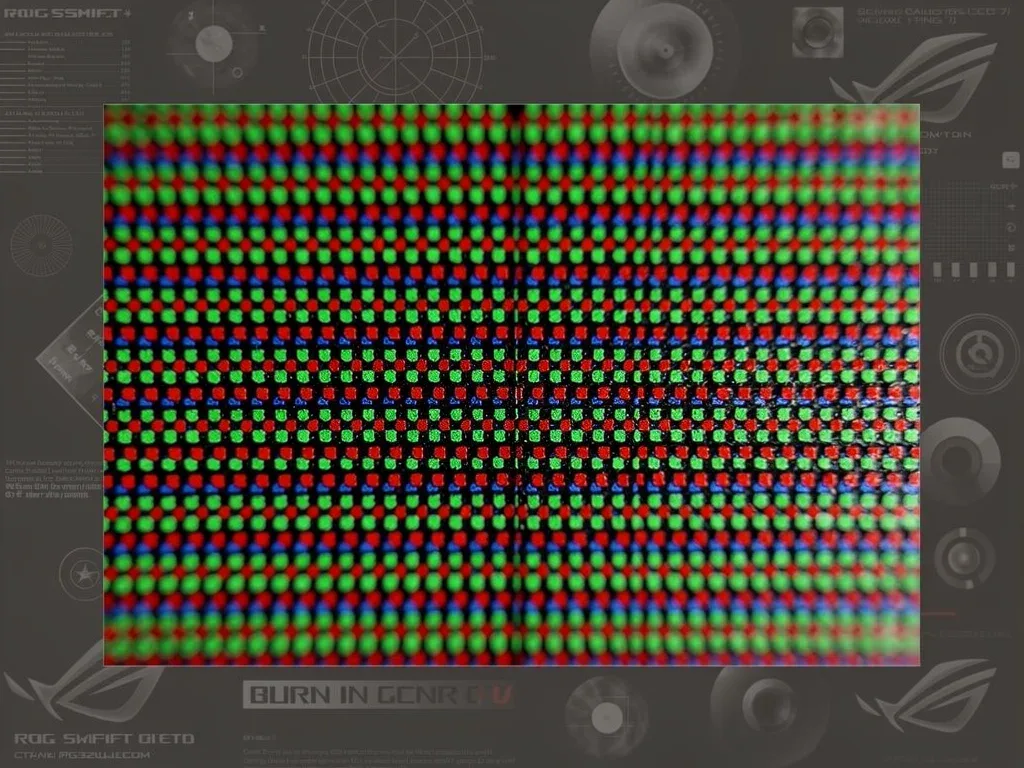
The analysis also covers an 800-hour burn-in test designed to provide insight into OLED longevity, image retention, and the effectiveness of the monitor's protective features.
From gaming performance and visual quality to ergonomics, connectivity, and long-term value, this review explores the key elements presented for this premium display.
Unveiling the Asus ROG Swift OLED PG32UCDM: Initial Impressions
The Asus ROG Swift OLED PG32UCDM combines a 32-inch OLED display with 4K resolution and a 240Hz refresh rate, positioning it within the premium gaming monitor segment.
Initial impressions highlight vibrant colors, deep blacks, fast response times, and the visual characteristics associated with OLED technology.
The review also focuses on usability and longevity, particularly the question of whether sustained desktop and gaming use can lead to visible burn-in.
Key Specifications and Design
The monitor uses a 32-inch QD-OLED panel with a native resolution of 3840 x 2160 and a refresh rate of up to 240Hz.
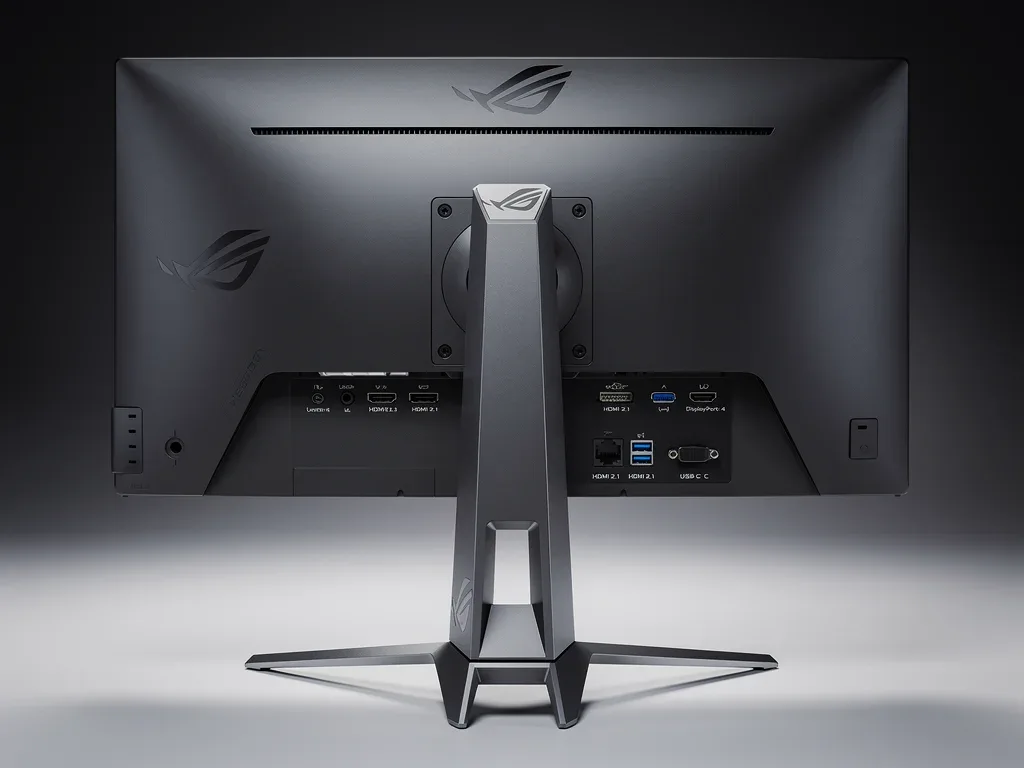
Its quoted 0.03ms GTG response time is complemented by connectivity that includes HDMI 2.1, DisplayPort 1.4, and USB-C with 90W Power Delivery.
The design includes an ergonomic stand, Aura Sync RGB lighting, a custom heatsink, and graphene film intended to improve heat dissipation.
Display Technology: 32-inch QD-OLED panel for superior color and contrast.
Resolution & Refresh Rate: Native 4K (3840x2160) at 240Hz for ultra-smooth visuals.
Response Time: Lightning-fast 0.03ms GTG for virtually no motion blur.
Connectivity: Comprehensive ports including HDMI 2.1, DisplayPort 1.4, and USB-C.
4K 240Hz Performance: A Deep Dive into Gaming Excellence
A central feature of the Asus ROG Swift OLED PG32UCDM is its ability to combine native 4K resolution with a 240Hz refresh rate.
The source describes supported games as highly fluid and responsive, with the high refresh rate helping reduce perceived motion blur and input delay.
Running demanding games at 4K and very high frame rates still requires powerful hardware, making the monitor especially relevant to high-end PC configurations.
Gaming Experience and Visual Fidelity
The QD-OLED panel provides deep blacks and high contrast, contributing to greater visual depth in both standard and HDR gaming content.
Colors are described as vibrant and accurate, while support for NVIDIA G-SYNC Compatible and AMD FreeSync Premium Pro helps provide smoother gameplay.
The 32-inch size further increases immersion and gives the Asus ROG Swift OLED PG32UCDM enough screen space for gaming and professional applications.
Unmatched Clarity: 4K resolution ensures incredibly sharp images and fine details.
Fluid Motion: 240Hz refresh rate eliminates stutter and ghosting in fast-action scenes.
HDR Brilliance: QD-OLED technology delivers stunning HDR with deep blacks and bright highlights.
Adaptive Sync: G-SYNC Compatible and FreeSync Premium Pro for smooth, tear-free gameplay.
800 Hours of Burn-In Testing: A Critical Assessment
Burn-in remains one of the major concerns associated with OLED monitors, particularly when static desktop elements remain visible for long periods.
The source reports an 800-hour test involving continuous use with a mixture of static imagery, desktop elements, gaming HUDs, and productivity applications.
This test is presented as an early indicator of how the Asus ROG Swift OLED PG32UCDM responds to sustained real-world usage patterns.
Methodology and Observations
The 800-hour testing procedure included fixed desktop icons, news tickers, gaming HUD elements, and other static content displayed for extended periods.
Daily inspections were used to look for image retention or pixel degradation while built-in OLED care functions remained active.
Pixel shifting, pixel refresh, the custom heatsink, and graphene film are presented as important parts of the monitor's approach to reducing OLED degradation.
Test Duration: 800 hours of continuous, varied usage.
Static Content: Included desktop icons, taskbars, and game HUDs.
OLED Care Features: Pixel shifting and pixel refresh actively engaged.
Inspection Frequency: Daily visual checks for image retention.
Burn-In Results and Longevity Projections
According to the source, the Asus ROG Swift OLED PG32UCDM showed no discernible permanent image retention after the 800-hour testing period.
The result is presented as a positive early indication for the effectiveness of the cooling system and OLED protection technologies.
At the same time, the source acknowledges that 800 hours does not constitute a definitive long-term durability test and that longer monitoring remains important.
Addressing OLED Concerns
Burn-in concerns have historically made some buyers cautious about choosing OLED technology for monitors used extensively with static interfaces.
Asus addresses this through features including pixel shifting, static logo detection, intelligent pixel refresh, and thermal management.
The source also recommends habits such as varying content, using screen savers, and hiding static interface elements when practical.
No Visible Burn-In: After 800 hours, no permanent image retention detected.
Effective Protection: Asus's OLED care features appear to be working as intended.
User Habits: Good practices still recommended for maximum panel longevity.
Future Monitoring: Continued long-term testing is crucial for definitive conclusions.
Comparing with Competitors: The OLED Monitor Landscape
The premium OLED gaming monitor market includes several models offering 4K resolution and high refresh rates similar to the Asus ROG Swift OLED PG32UCDM.
Differences between competing displays may involve QD-OLED versus WOLED panels, brightness behavior, warranties, cooling systems, and manufacturer-specific protection features.
These distinctions can influence value depending on whether the buyer prioritizes color, brightness, burn-in protection, responsiveness, or other characteristics.
QD-OLED vs. WOLED and Other Technologies
The source describes QD-OLED as offering strong color volume and saturation, particularly when displaying HDR content.
WOLED and QD-OLED each have different characteristics, while technologies such as Mini-LED provide another approach to brightness and contrast.
The Asus ROG Swift OLED PG32UCDM is positioned as balancing premium visual performance with cooling and panel-protection measures.
QD-OLED Advantage: Superior color volume and saturation.
Brightness Comparison: Competitive peak brightness with excellent color fidelity.
Burn-In Warranty: Asus offers a strong warranty against burn-in, a key differentiator.
Value Proposition: Balances premium features with a robust build and protective measures.
User Experience and Ergonomics
Performance is only one part of the experience, and the monitor also emphasizes physical adjustability and practical connectivity.
The stand supports tilt, swivel, pivot, and height adjustments, helping users adapt the screen position to different desk setups.
Its OSD controls, multiple display inputs, and USB connectivity are intended to make the Asus ROG Swift OLED PG32UCDM suitable for both gaming and productivity.
Software Features and Calibration
Asus includes multiple display modes designed for different content types, including sRGB, DCI-P3, and gaming-oriented presets.
The monitor is described as factory calibrated, while additional settings can be adjusted through the OSD and Asus display utilities.
OLED care controls are also available through the interface, giving users access to features designed to help manage panel longevity.
Ergonomic Stand: Full range of adjustments for comfortable viewing.
Intuitive OSD: Easy navigation with a joystick control.
Robust Connectivity: Multiple ports for diverse device connections.
Factory Calibration: Ensures accurate colors and image quality out of the box.
Price, Value, and Target Audience
The Asus ROG Swift OLED PG32UCDM is positioned as a premium monitor, reflecting its combination of QD-OLED technology, 4K resolution, and 240Hz performance.
Its intended audience includes high-end gamers and professional users who place strong emphasis on image quality, responsiveness, and display technology.
The source presents its cooling measures, OLED care features, connectivity, and burn-in warranty as factors contributing to its overall value proposition.
Is the Investment Worthwhile?
For users seeking premium gaming performance and OLED image quality, the source presents the monitor as a compelling option.
The reported 800-hour burn-in results provide additional reassurance within the scope of that testing period, while the warranty further supports confidence in the product.
Buyers with less demanding requirements or smaller budgets may have alternatives, making the value decision dependent on priorities and intended use.
Premium Pricing: Reflects advanced technology and features.
Target Audience: High-end gamers and creative professionals.
Value Proposition: Top-tier performance, advanced burn-in protection, and strong warranty.
Investment Decision: Justified for those prioritizing ultimate display quality.
Future Prospects for OLED Gaming Monitors
Products such as the Asus ROG Swift OLED PG32UCDM reflect the continued development of OLED technology for desktop gaming.
The source anticipates further improvements in refresh rates, brightness, display sizes, and measures designed to reduce concerns surrounding burn-in.
It also suggests that broader manufacturing scale could eventually make premium OLED gaming technology accessible to more consumers.
Technological Advancements and Market Trends
The combination of high resolution and high refresh rates is expected to remain an important direction for premium gaming monitors.
Further development of pixel-management systems and other burn-in prevention technologies could strengthen consumer confidence in desktop OLED displays.
As manufacturing becomes more efficient, the market may see greater competition and potentially more accessible pricing across this category.
OLED Maturation: Technology becoming more robust for desktop use.
Higher Specifications: Expect even faster refresh rates and brighter panels.
Burn-In Solutions: Continued innovation in prevention and warranty support.
Market Accessibility: Potential for wider adoption as prices become more competitive.
The Asus ROG Swift OLED PG32UCDM 32-Inch Monitor Review: 4K 240Hz Performance Tested for Burn-In After 800 Hours is presented as an important benchmark within this evolving display category.
Key Aspect | Review Summary |
|---|---|
Performance | Exceptional 4K 240Hz gaming, vibrant QD-OLED visuals. |
Burn-In Resilience | No burn-in after 800 hours, robust protective features. |
Value for Money | Premium price for top-tier performance and durability. |
Ergonomics & Design | Highly adjustable stand, intuitive OSD, sleek aesthetics. |
Frequently Asked Questions About the Asus ROG Swift OLED PG32UCDM
What are the main display features of the Asus ROG Swift OLED PG32UCDM?▼
The monitor features a 32-inch QD-OLED panel, 3840 x 2160 resolution, 240Hz refresh rate, and a quoted 0.03ms GTG response time.
How did the Asus ROG Swift OLED PG32UCDM perform in burn-in tests after 800 hours?▼
According to the source, no permanent image retention or visible burn-in was detected after the described 800-hour testing period.
Is the Asus ROG Swift OLED PG32UCDM suitable for competitive gaming?▼
The source presents its 240Hz refresh rate, 0.03ms GTG response time, 4K resolution, and adaptive-sync support as suitable for high-performance gaming.
What connectivity options does the Asus ROG Swift OLED PG32UCDM offer?▼
The listed connectivity includes two HDMI 2.1 ports, DisplayPort 1.4, USB-C with 90W Power Delivery, and USB connectivity for peripherals.
What is the value proposition of the Asus ROG Swift OLED PG32UCDM?▼
The source positions it as a premium option combining high-end QD-OLED performance, extensive connectivity, burn-in protection, and features aimed at enthusiasts and professional users.
Perspectives
The Asus ROG Swift OLED PG32UCDM 32-Inch Monitor Review: 4K 240Hz Performance Tested for Burn-In After 800 Hours provides a benchmark for evaluating premium OLED gaming displays.
Its combination of 4K resolution, 240Hz performance, QD-OLED image characteristics, cooling measures, and the reported 800-hour result represents the core value described in the review.
The source presents continued OLED development as likely to bring improvements in performance, longevity, and accessibility as competition within the gaming monitor market increases.