Herman Miller Embody Review: 1,200 Hours Lumbar Support
Anúncios
This Herman Miller Embody Review examines the chair's adaptive lumbar support, ergonomic adjustments, material durability, long-term comfort potential, and overall value for professionals spending extended periods at their desks.
This Herman Miller Embody Review explores how the chair's ergonomic design, adjustable features, and adaptive backrest may support comfort during extended working hours.
Premium office chairs offer different approaches to spinal support, pressure distribution, and posture adjustment, making individual comfort an important consideration before purchasing.
This guide examines the Embody's features, potential limitations, maintenance requirements, and factors worth evaluating over approximately 1,200 hours of regular desk use.
Initial Impressions Versus Long-Term Reality
The Herman Miller Embody stands out for its distinctive backrest, flexible support structure, and design philosophy focused on accommodating movement during seated activities.
Initial impressions may differ considerably from long-term experiences because comfort depends on individual body dimensions, workstation configuration, and personal seating preferences.
This Herman Miller Embody Review considers these differences to help prospective buyers evaluate the chair beyond its appearance and premium market positioning.
The Embody's Unique Design Philosophy
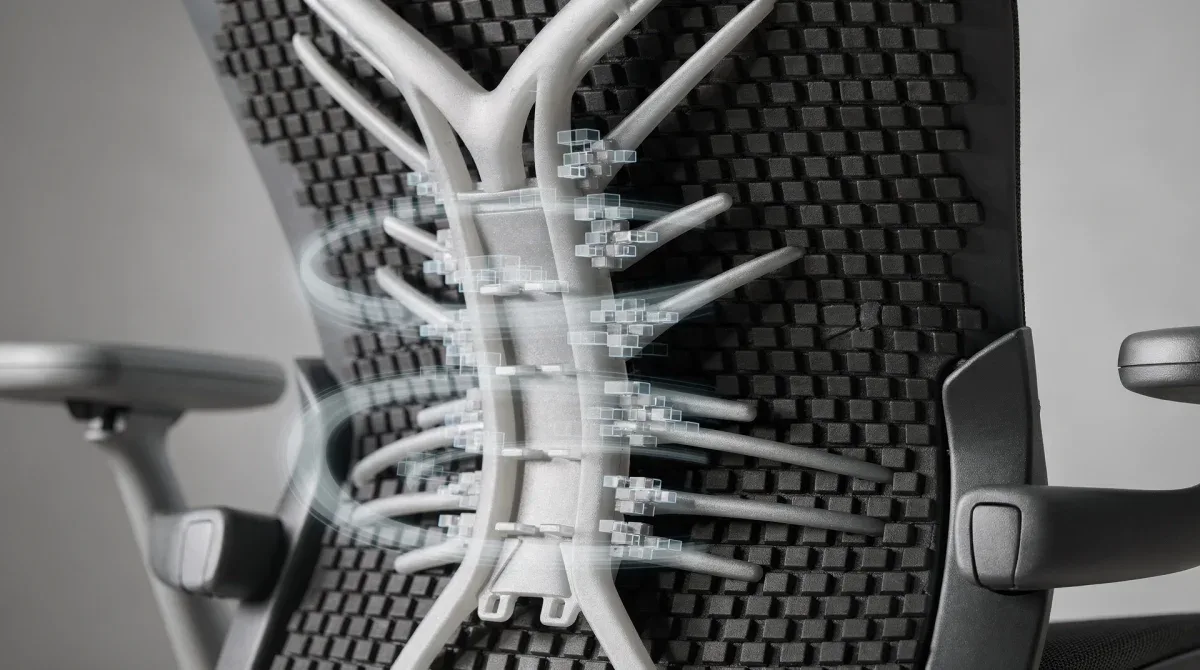
The Embody features a flexible backrest and distributed support structure designed to accommodate changes in posture while supporting different seated working positions.
Its distinctive construction incorporates flexible elements throughout the seat and backrest, allowing contact with the user's body to change during movement.
Unlike conventional chairs with rigid backrests, the Embody emphasizes adaptable support rather than maintaining the user in a single fixed seating position.
Adjustability and Customization for Diverse Users
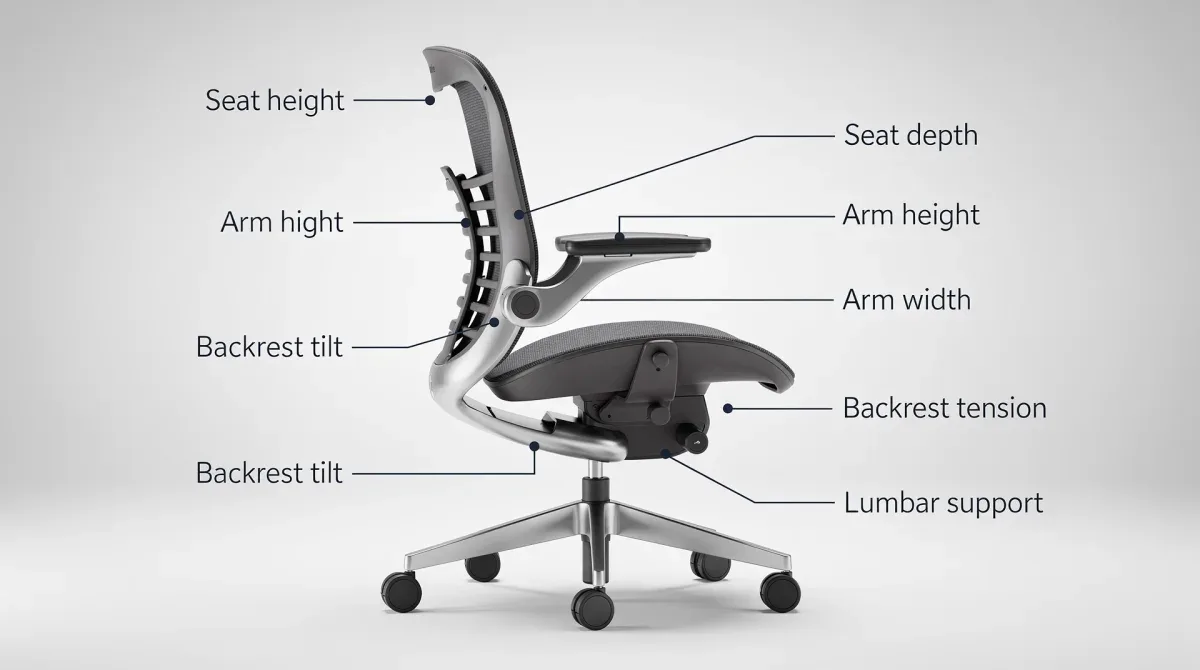
The Embody offers adjustments involving seat height, seat depth, armrest positioning, backrest configuration, recline resistance, and the available range of backward movement.
These features allow users to customize their seating arrangements according to their body dimensions, workstation height, and preferences regarding support during daily activities.
Adjustability remains an important consideration throughout this Herman Miller Embody Review because individual configuration can substantially influence the overall seating experience.
Understanding the 1,200-Hour Evaluation Scenario
Approximately 1,200 hours of desk use represents 150 working days when a chair is occupied for eight hours during each working day.
This timeframe provides a useful reference for evaluating comfort, upholstery condition, mechanical adjustments, and whether initial seating preferences remain consistent over time.
However, this article examines documented product features and evaluation criteria rather than presenting results from an independently conducted 1,200-hour physical test.
Deep Dive Into Lumbar Support Performance
Lumbar support represents a central consideration in this Herman Miller Embody Review because lower back comfort can influence the overall experience of prolonged sitting.
The Embody incorporates support within its flexible backrest rather than relying on a conventional lumbar cushion that can be repositioned independently.
This design may appeal to users who prefer distributed back support, although individual preferences concerning firmness and contact pressure can differ considerably.
Adaptive Support Mechanisms in Action
The Embody's flexible backrest is designed to accommodate subtle changes in seated posture, providing support as users adjust their positions during working activities.
Its distributed structure allows different areas of the backrest to respond to movement rather than relying exclusively on one concentrated support point.
Long-term comfort depends on appropriate adjustment, individual anatomy, sitting habits, and other factors that cannot be determined from product specifications alone.
Understanding the Backfit Adjustment System
The Backfit adjustment allows users to modify the backrest's configuration according to their spinal curvature and preferences regarding contact with the chair.
Finding a suitable setting may require several adjustments, especially for individuals transitioning from traditional office chairs with separate lumbar support mechanisms.
This Herman Miller Embody Review highlights Backfit as an important feature for personalizing support, although it does not provide independently adjustable lumbar height.
Addressing Specific Lumbar Concerns
Users who prefer pronounced lower back pressure may experience the Embody differently from individuals who appreciate support distributed across a larger backrest area.
People with persistent lower back discomfort should consider their complete workstation configuration rather than expecting an individual chair to resolve underlying medical conditions.
Testing different ergonomic chair designs can help determine whether integrated back support or a separately adjustable lumbar mechanism better matches individual preferences.
Comfort and Fatigue Reduction Over Time
Comfort during extended desk use depends on several factors, including seat dimensions, upholstery characteristics, support distribution, workstation configuration, and opportunities to change posture.
The Embody's design addresses several of these considerations through adjustable components and flexible structures intended to accommodate movement throughout the working day.
This Herman Miller Embody Review distinguishes these intended design benefits from guaranteed reductions in fatigue, discomfort, or other individual health outcomes.
Understanding Pixelated Support Technology
The Pixelated Support system incorporates multiple flexible support elements within the chair, allowing its surfaces to respond to changes in body positioning.
This construction is intended to distribute seating pressure across different contact areas rather than concentrating support exclusively around a small number of points.
Individual perceptions of firmness and comfort may vary depending on body weight, seating preferences, clothing, and the amount of time spent sitting.
Impact on Posture and Overall Well-Being
An appropriately adjusted office chair can support comfortable working positions by helping users maintain suitable alignment between their back, arms, and working surfaces.
Nevertheless, even a premium ergonomic chair cannot eliminate the potential discomfort associated with remaining in the same seated position for extended periods.
Regular movement, changes in posture, and appropriate workstation adjustments remain important components of maintaining comfort during computer-based work.
Seat Comfort During Extended Working Sessions
The Embody's seat incorporates a flexible support structure beneath its upholstery, providing a different seating experience from traditional thick foam office cushions.
Its adjustable seat depth allows users to modify thigh support while maintaining sufficient space between the seat edge and their knees.
Seat comfort remains subjective, making a personal trial particularly valuable when considering this Herman Miller Embody Review and other premium seating options.
Ergonomic Adjustments and User Experience
Ergonomic adjustments allow users to customize their office chair according to workstation dimensions, individual body proportions, and preferences regarding support during daily activities.
The Embody provides several independent controls that can be configured to accommodate different seated positions and working arrangements throughout the day.
Understanding these controls is essential when evaluating whether the chair's premium design offers practical advantages for your particular working environment.
Recline and Tilt Functionality
The Embody incorporates a reclining mechanism with adjustable resistance, allowing users to select how much effort is required to move the backrest backward.
Its tilt limiter provides control over the available reclining range, which may be useful when alternating between focused computer work and relaxed activities.
This Herman Miller Embody Review identifies adjustable reclining resistance as a useful feature for individuals who prefer changing positions throughout their working day.
Armrest Design and Support
Adjustable armrests allow users to modify their height and width, helping accommodate different shoulder positions and the available space around their workstation.
Appropriate armrest positioning should permit relaxed shoulders and comfortable access to input devices without requiring the user to maintain an elevated arm position.
However, users requiring additional armrest depth or rotational adjustments may prefer alternative office chairs offering a wider range of positioning options.
Seat Height and Depth Adjustments
Seat height should be adjusted to support comfortable leg positioning, allowing the feet to rest securely on the floor or an appropriate footrest.
Seat depth should provide sufficient thigh support without creating excessive contact pressure behind the knees or preventing comfortable use of the backrest.
These adjustments provide a practical foundation for configuring the Embody before fine-tuning other settings involving backrest support, reclining resistance, and armrest positioning.
How to Configure an Ergonomic Workstation
The official Occupational Safety and Health Administration guidance provides information about appropriate office chair adjustments, back support, seat positioning, and workstation ergonomics.
Users should also consider monitor height, keyboard placement, available legroom, and whether their desk allows comfortable positioning of the shoulders and forearms.
A well-configured workstation complements the features discussed in this Herman Miller Embody Review without depending exclusively on the chair to address every ergonomic concern.
Comparative Analysis and Value Proposition
The Herman Miller Embody occupies the premium office chair category, where purchasing decisions often involve careful consideration of design features and expected ownership expenses.
Its flexible backrest and adjustable seat distinguish its approach from chairs using suspended mesh, conventional foam cushions, or independently positioned lumbar support components.
Evaluating its value requires considering individual comfort, available alternatives, warranty coverage, and the amount of money allocated to improving your working environment.
Herman Miller Embody vs. Aeron
The Herman Miller Aeron uses a suspended mesh seating design, offering a different experience regarding ventilation, pressure distribution, and contact with the backrest.
The Embody features upholstered seating and adjustable seat depth, while Aeron buyers generally select from different chair sizes to match their body dimensions.
Both approaches can accommodate ergonomic working arrangements, but individual preferences concerning firmness, ventilation, and backrest design should guide the purchasing decision.
Herman Miller Embody vs. Steelcase Gesture
The Steelcase Gesture provides another premium ergonomic seating option, with particular attention to adjustable arm positioning and support during different types of work.
The Embody emphasizes flexible back support and distributed seating pressure, offering a distinctive approach for individuals who value movement while seated.
This Herman Miller Embody Review recommends comparing both designs personally when possible because technical specifications cannot establish which chair will feel more comfortable.
Return on Investment for Long-Term Users
Professionals spending substantial time at their desks may consider premium office seating as part of a broader investment in their working environment.
However, purchasing an expensive ergonomic chair does not guarantee improved productivity, increased concentration, reduced medical expenses, or other measurable financial benefits.
Value should instead be assessed through personal comfort, anticipated ownership duration, warranty conditions, and the availability of suitable alternatives at lower prices.
Calculating the Long-Term Cost of Ownership
Evaluating the annual ownership cost can provide a different perspective from comparing office chairs exclusively according to their initial retail prices.
For example, a hypothetical chair costing $1,800 and remaining in service for twelve years would represent an initial purchase expense of $150 annually.
This calculation excludes taxes, repairs, financing charges, and other expenses, while the assumed service period should not be interpreted as guaranteed durability.
Maintenance and Longevity Insights
Proper maintenance can contribute to preserving office furniture by reducing avoidable damage associated with unsuitable cleaning methods, neglected components, and inappropriate usage.
The Embody contains upholstered surfaces, adjustment mechanisms, flexible support elements, and structural components that may require different approaches to routine maintenance.
This Herman Miller Embody Review considers maintenance requirements as an important factor for individuals planning to retain their office furniture for extended periods.
Material Durability and Aesthetic Longevity
Premium office chairs are generally designed for repeated use, although their appearance and mechanical condition can change depending on individual operating circumstances.
Upholstery wear, seat compression, unusual noises, and changes in adjustment resistance represent useful indicators to monitor during extended periods of regular use.
Without documented physical testing, it would be inappropriate to claim that every Embody chair remains free from visible wear after 1,200 hours.
Cleaning and Care Recommendations
Routine cleaning should follow the manufacturer's instructions for the specific upholstery and surface materials selected when purchasing the Herman Miller Embody chair.
Different fabrics may require particular cleaning methods, making it important to verify appropriate procedures before applying detergents or specialized cleaning products.
Avoiding unsuitable chemicals, abrasive tools, and excessive moisture can help protect the chair's finishes while maintaining its appearance throughout regular daily use.
Warranty and Customer Support Experience
Herman Miller advertises a 12-year warranty for new Embody office chairs, subject to the applicable purchase conditions, product coverage, and warranty exclusions.
Buyers should retain purchase documentation and review relevant warranty terms, particularly when purchasing through authorized dealers or comparing new and secondhand products.
Warranty coverage adds useful context to this Herman Miller Embody Review but does not establish that every chair will remain defect-free throughout ownership.
Purchasing a Used Herman Miller Embody
Secondhand office chairs may offer lower purchase prices, although their condition, previous usage, available documentation, and remaining warranty protections require careful consideration.
Before purchasing, inspect the upholstery, armrests, adjustment controls, seat mechanism, backrest structure, and other components that may influence comfort and functionality.
Confirm warranty eligibility directly with the manufacturer rather than assuming that coverage associated with the original purchase automatically transfers to subsequent owners.
User Feedback and Real-World Scenarios
Individual feedback about ergonomic furniture can provide useful perspectives on comfort preferences, adjustment experiences, material characteristics, and potential concerns during regular ownership.
However, experiences reported by other users should not be interpreted as representative of everyone because body dimensions and workstation requirements vary considerably.
This Herman Miller Embody Review therefore focuses on practical evaluation criteria rather than unsupported claims about satisfaction rates among long-term users.
Potential Advantages and Common Considerations
The Embody's flexible backrest, adjustable seat depth, distinctive design, and reclining options represent potential advantages for individuals seeking a customizable office seating experience.
Its premium purchase price and integrated lumbar support may represent limitations for buyers who prefer more affordable furniture or independently adjustable lumbar mechanisms.
Prospective buyers should consider whether these characteristics align with their personal preferences rather than assuming that premium pricing guarantees superior individual comfort.
Suitability for Different Work Environments
The Embody can be incorporated into corporate offices, home workstations, creative environments, and other settings where individuals spend considerable time performing seated activities.
Professionals working with software development, graphic design, writing, or administrative tasks may appreciate the ability to adjust seating positions throughout their working day.
Nevertheless, workstation compatibility remains important because desk dimensions, monitor placement, and available working space can influence the effectiveness of ergonomic adjustments.
Suitability for Remote and Hybrid Workers
Remote and hybrid workers may spend extended periods using home office furniture, increasing the importance of evaluating equipment according to their daily activities.
A suitable chair should complement available workspace dimensions, desk height, and the user's preferences concerning reclining movement and support during computer-based tasks.
This Herman Miller Embody Review provides useful considerations for individuals exploring premium seating options while developing more comfortable home office arrangements.
How to Evaluate the Embody After 1,200 Hours
Evaluating an office chair over approximately 1,200 hours requires documenting its condition, comfort characteristics, and adjustment performance throughout a defined period of regular use.
Meaningful comparisons should consider consistent evaluation criteria while accounting for changes in workstation configuration, sitting habits, and the activities performed by individual users.
Without these records, conclusions concerning sustained comfort, material durability, or improvements in physical well-being remain subjective rather than independently verified findings.
Evaluating Lumbar Support Over Time
Users can document their perceptions of lower back support at regular intervals, noting whether particular settings remain comfortable during different working activities.
Recording changes in backrest configuration may help identify whether initial adjustments require modification after becoming more familiar with the chair's design.
Persistent discomfort should be assessed within the broader context of workstation ergonomics and, when appropriate, discussed with a qualified healthcare professional.
Monitoring Upholstery and Mechanical Components
Periodic inspections can help identify changes involving upholstery appearance, seat support, armrest movement, reclining resistance, and other frequently used mechanical components.
Photographs and written observations may provide useful comparisons between the chair's initial condition and its appearance after extended periods of regular use.
This approach can produce more meaningful evidence for a future Herman Miller Embody Review than relying exclusively on promotional descriptions or initial impressions.
Assessing Comfort Throughout the Working Day
Comfort assessments should consider different working periods, including morning sessions, afternoon activities, and tasks requiring sustained concentration or frequent changes in seating position.
Users may find it helpful to record their comfort preferences while maintaining appropriate movement breaks and avoiding unnecessarily prolonged periods of uninterrupted sitting.
Comparisons should distinguish personal seating experiences from medical outcomes, which require appropriate clinical evaluation rather than informal office furniture testing.
Future Outlook and Ergonomic Evolution
Ergonomic furniture continues to evolve through developments involving adjustable components, flexible support structures, upholstery materials, and different approaches to improving workstation compatibility.
Established chair designs remain relevant when their features address practical user requirements, although newer products may offer additional customization or alternative support arrangements.
The Herman Miller Embody represents one approach to this evolving market, combining distinctive construction with adjustments intended to accommodate individual seating preferences.
Innovations and Trends in Ergonomic Seating
Developments in ergonomic seating may include more adaptable materials, adjustable support mechanisms, and technologies intended to provide feedback about individual sitting habits.
These innovations should be evaluated according to practical functionality, reliability, repairability, and whether they provide meaningful advantages within ordinary working environments.
More advanced technology does not necessarily guarantee better seating comfort because individual preferences and appropriate workstation configuration remain essential considerations.
The Embody's Place in a Changing Landscape
The Embody's distinctive support structure provides an alternative to traditional office chairs that depend primarily on rigid backrests and conventional cushioning arrangements.
Readers exploring another ergonomic office chair review can compare additional seating features while considering the evidence supporting claims about comfort and productivity.
Ultimately, the Embody's relevance depends on how effectively its design accommodates individual preferences, workplace requirements, and the financial priorities of prospective buyers.
Who Should Consider the Herman Miller Embody?
The Embody may appeal to individuals seeking premium office furniture with adjustable seat depth, flexible back support, and customizable reclining functionality.
It may also interest professionals who prefer changing their seated positions throughout the working day rather than relying on rigid support structures.
This Herman Miller Embody Review suggests evaluating these characteristics alongside personal comfort preferences and the availability of opportunities to test the chair.
When Alternative Office Chairs May Be More Suitable
Individuals requiring independently adjustable lumbar height, additional armrest positioning options, or a different seating surface may prefer alternative ergonomic office chair designs.
Budget-conscious buyers should also consider whether less expensive models provide appropriate adjustments and sufficient comfort for their particular working requirements.
The most suitable office chair is not necessarily the most expensive model, but one that fits individual needs and practical financial circumstances.
What to Check Before Making a Purchase
Prospective buyers should review the official Herman Miller Embody product specifications to confirm available adjustments, upholstery options, warranty information, and other relevant purchasing details.
Comparing return policies and available trial opportunities can be particularly valuable when purchasing premium office furniture without previously experiencing its seating characteristics.
Careful evaluation can help determine whether the Embody represents an appropriate investment without relying exclusively on brand reputation or generalized ergonomic benefit claims.
Key Aspect | Long-Term Evaluation |
|---|---|
Lumbar Support | Integrated, adaptive backrest support with Backfit adjustment. Individual comfort may vary. |
Overall Comfort | Adjustable seating and distributed support designed to accommodate movement during prolonged use. |
Durability | Premium construction with a 12-year manufacturer warranty, subject to applicable terms and conditions. |
Value Proposition | High initial investment that should be evaluated according to individual comfort, ownership duration, and available alternatives. |
Frequently Asked Questions About the Embody Chair
Does the Herman Miller Embody provide sufficient lumbar support for long hours?
The Embody features an integrated flexible backrest and Backfit adjustment intended to accommodate spinal curvature and seated movement. However, individual comfort varies, and users requiring more targeted lumbar pressure may prefer chairs with independently adjustable support mechanisms.
Is the Embody chair worth its high price point for daily use?
The value depends on individual comfort preferences, available budget, workstation compatibility, and expected ownership duration. Its adjustable features and manufacturer warranty may appeal to long-term users, although purchasing a premium chair does not guarantee improved health or productivity.
How does the Embody's lumbar support compare to chairs with adjustable pads?
The Embody integrates its support within the flexible backrest rather than using a separate lumbar cushion with independent height adjustment. Users who prefer distributed support may appreciate this approach, while others may prefer more targeted lumbar adjustments.
What is the expected lifespan of a Herman Miller Embody chair?
Herman Miller advertises a 12-year warranty for new Embody office chairs under applicable conditions. Actual service life depends on usage, maintenance, material wear, and individual operating circumstances. Warranty duration does not guarantee a specific lifespan.
Does the Embody chair help with posture improvement?
Its adjustable design can support suitable seated working positions when properly configured. However, maintaining comfortable posture also involves workstation adjustments, regular movement, and individual physical characteristics.
Was this Herman Miller Embody Review based on an actual 1,200-hour test?
No. This article evaluates documented manufacturer specifications, ergonomic principles, and practical criteria for assessing long-term ownership. The 1,200-hour timeframe is used as an illustrative evaluation scenario rather than a completed independent physical test.
Does the Herman Miller Embody have adjustable lumbar height?
The Embody features Backfit adjustment for modifying its backrest configuration. However, it does not include a conventional lumbar pad that can be independently moved vertically to target specific areas of the lower back.
Is the Herman Miller Embody better than the Aeron?
Neither chair is universally better. The Embody uses upholstered seating and flexible distributed support, while the Aeron features suspended mesh construction. The most suitable option depends on body dimensions, ventilation preferences, desired adjustments, and individual comfort.
Can the Embody chair eliminate lower back pain?
No office chair can guarantee the elimination of lower back pain. Appropriate seating may contribute to comfort, but persistent pain can involve multiple factors and should be evaluated by a qualified healthcare professional when necessary.
Does the Herman Miller Embody improve productivity?
A comfortable and appropriately configured workstation may support concentration and reduce distractions associated with discomfort. However, this article does not establish a measurable productivity increase resulting specifically from using the Embody chair.
Is buying a used Herman Miller Embody a good option?
A used Embody may offer a lower purchase price, provided its condition and functionality are carefully verified. Buyers should inspect its components, confirm seller reliability, and independently check whether any warranty protections remain available.
Can I sit in the Herman Miller Embody for eight hours without taking breaks?
Extended uninterrupted sitting is not recommended simply because a chair offers ergonomic features. Regular movement, changes in working positions, and appropriate breaks remain important for maintaining comfort throughout the day.
Conclusion
This Herman Miller Embody Review highlights the chair's distinctive backrest, adjustable seating features, flexible support structure, and considerations associated with long-term premium furniture ownership.
Although its design may provide a comfortable working experience, individual results depend on appropriate configuration, personal preferences, workstation compatibility, and daily sitting habits.
Evaluating available alternatives, testing the chair when possible, and reviewing official warranty conditions can help buyers make a more informed and suitable purchasing decision.