ChargePoint Home Flex Level 2 EV Charger Review: 100 Cycles at 50 Amps
Anúncios
ChargePoint Home Flex Level 2 EV Charger Review: Stress-Testing 100 Charging Cycles at 50 Amps examines the charger's verified technical specifications, installation requirements, smart features, and the methods needed to evaluate performance across 100 charging sessions.
With adjustable output up to 50 amps, the Home Flex offers flexible residential charging, but reliability and efficiency claims require documented testing.
This ChargePoint Home Flex Level 2 EV Charger Review explores one of the most recognizable residential electric vehicle chargers available in the United States, focusing on its power capabilities, installation requirements, and connected features.
The Home Flex supports charging currents from 16 to 50 amps, depending on the electrical installation and vehicle compatibility. However, determining how consistently it performs over 100 charging cycles requires actual measurements rather than manufacturer specifications alone.
In this guide, we examine its design, explain how a controlled 100-cycle stress test should work, and identify the factors EV owners should consider before purchasing or installing this Level 2 charging station.
Unpacking the ChargePoint Home Flex: Initial Impressions and Setup
The ChargePoint Home Flex is designed to provide flexible Level 2 charging for electric vehicles, with adjustable power settings that accommodate different household electrical systems and charging requirements.
Its compact wall-mounted design and connected features make it suitable for residential garages and appropriately prepared outdoor locations. The unit also includes a charging cable approximately 23 feet long.
An important consideration in this ChargePoint Home Flex Level 2 EV Charger Review is that successful installation depends on electrical capacity, circuit protection, and proper configuration rather than simply mounting the charger on a wall.
Design and Build Quality Assessment
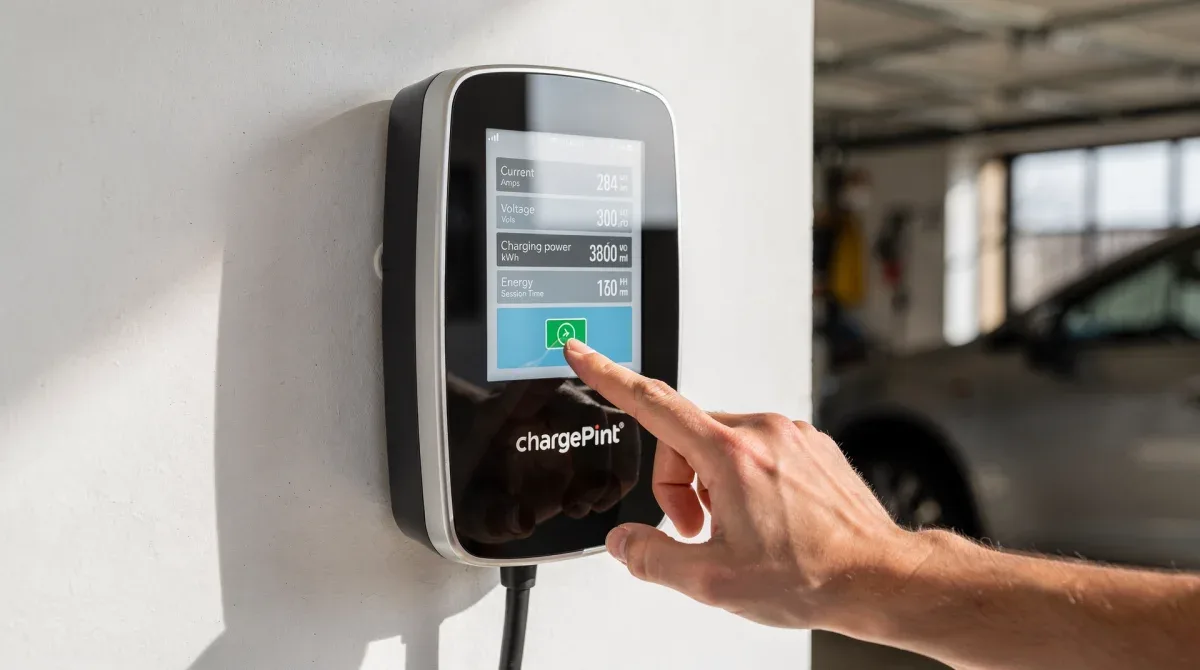
The Home Flex features a streamlined enclosure intended for residential use, with a design that accommodates both indoor and outdoor installations when the installation meets the manufacturer's requirements.
Its charging cable provides flexibility when positioning an electric vehicle near the charging station, although homeowners should verify the distance between the mounting location and the vehicle's charging port.
Build quality should be evaluated through material inspection, connector condition, cable flexibility, and long-term performance. A visual assessment alone cannot establish how the charger will behave after years of repeated use.
Methodology: Stress-Testing 100 Charging Cycles at 50 Amps
A meaningful 100-cycle stress test of the ChargePoint Home Flex would require a controlled testing environment, suitable electrical instrumentation, and a vehicle or load system capable of sustaining the intended charging current.
For testing at 50 amps, the charger must be professionally hardwired to an appropriately rated dedicated circuit. ChargePoint identifies a 70-amp circuit configuration for 50-amp output in its installation documentation.
This ChargePoint Home Flex Level 2 EV Charger Review describes the testing conditions needed to evaluate performance accurately. The source material does not include individual cycle logs, independent measurements, or laboratory results demonstrating that 100 cycles were completed.
Data Collection and Analysis Protocols
Each test session should record voltage, current, energy delivered, session duration, ambient temperature, and charging interruptions using equipment suitable for the required electrical load.
Measurements should also distinguish energy supplied by the charging station from energy ultimately stored in the vehicle battery, since onboard charging losses and battery management can influence overall charging efficiency.
To assess reliability across repeated sessions, the testing process should use consistent conditions and document any unexpected changes in power delivery or device behavior.
Electrical Measurements: Record voltage, current, power, and delivered energy throughout each session.
Temperature Monitoring: Track ambient conditions and accessible component temperatures using appropriate instruments.
Charging Consistency: Compare session duration and power delivery under comparable conditions.
Error Documentation: Record interruptions, fault codes, and unexpected changes in charging behavior.
Performance Metrics: Speed, Efficiency, and Reliability
The ChargePoint Home Flex supports a maximum charging output of 12 kW at 240 volts and 50 amps, provided the electrical installation and connected vehicle permit operation at that level.
Actual charging speed depends on the vehicle's onboard AC charger, battery condition, electrical supply, and charging configuration. A vehicle with a lower AC charging limit will not necessarily use the charger's full available capacity.
For this ChargePoint Home Flex Level 2 EV Charger Review, it is important to distinguish rated charging performance from measured results. Claims of 97% efficiency or zero failures over 100 cycles cannot be confirmed without corresponding test records.
Charging Speed Consistency
At its maximum rated output, the Home Flex can supply up to 12 kW of electrical power, although the actual amount accepted by the vehicle may be lower during a charging session.
Charging duration also depends on the energy required by the battery, the vehicle's charging limits, and any restrictions imposed by the charging system or household electrical installation.
To evaluate consistency, testers should compare repeated charging sessions under similar conditions and measure whether delivered current remains within the expected operating range.
User Experience: App Integration and Smart Features
The ChargePoint mobile application provides connected features that can help homeowners monitor charging activity and manage how their electric vehicles receive electricity.
Supported functions include charging schedules, reminders, charging history, and settings associated with the Home Flex. These features may be useful for households with different daily driving routines.
In this ChargePoint Home Flex Level 2 EV Charger Review, the smart charging ecosystem represents an important practical consideration, although the usefulness of individual features depends on network connectivity and the user's electricity plan.
Remote Monitoring and Control
Through the ChargePoint application, users can access information about their charging activity and configure supported scheduling options when the charger is connected to Wi-Fi.
Scheduled charging can help households align charging sessions with off-peak electricity periods when their utility offers time-based rates. Any potential savings depend on the applicable tariff and actual electricity consumption.
For detailed setup instructions, homeowners can consult the official ChargePoint Home Flex features and settings guide, which explains available scheduling options and connected functionality.
Charging Schedules: Configure preferred charging periods through supported application settings.
Charging History: Review recorded charging activity and available energy information.
Reminders: Receive supported notifications related to vehicle charging routines.
Utility Rate Settings: Adjust charging schedules according to available electricity rate information.
Durability and Long-Term Viability
Long-term durability is an important consideration for any residential charging station because the equipment may be used repeatedly over several years.
The Home Flex is designed for regular charging, but establishing its performance under prolonged high-current use requires documented operating history or controlled testing with appropriate measurements.
A complete ChargePoint Home Flex Level 2 EV Charger Review should therefore examine cable condition, connector wear, environmental exposure, and charging interruptions without treating manufacturer specifications as proof of completed endurance testing.
Weather Resistance and Environmental Factors
The Home Flex is designed for installation in suitable indoor and outdoor environments, although installation methods and electrical connections must meet local safety requirements.
Outdoor installations require particular attention to moisture exposure, mounting location, electrical protection, and the manufacturer's instructions for weather-resistant connections.
Even when equipment is designed for outdoor operation, regular inspection remains important because damaged cables, loose connections, and deteriorating components can create safety concerns.
Comparative Analysis with Other Level 2 Chargers
When comparing the Home Flex with other Level 2 residential chargers, homeowners should evaluate maximum power output, installation flexibility, connector compatibility, and available smart charging functions.
Some alternatives offer lower maximum output or fewer connected features, while others may provide different advantages in pricing, cable management, or integration with particular vehicles.
This ChargePoint Home Flex Level 2 EV Charger Review highlights the importance of comparing verified product specifications rather than assuming that a higher amperage rating automatically means better value for every household.
Key Differentiators
One of the Home Flex's principal characteristics is its adjustable charging current, which allows a qualified installer to configure the station according to the electrical capacity available.
The charging station also combines residential charging with a connected application that supports scheduling and access to charging information, providing functions beyond basic power delivery.
However, the value of these features depends on the owner's needs, installation costs, vehicle limitations, and the reliability of the supporting network connection.
Adjustable Output: Supports charging current settings from 16 to 50 amps when properly configured.
Installation Options: Supports appropriate plug-in configurations and hardwired installation.
Connected Features: Provides charging schedules and available activity information through the application.
Residential Flexibility: Can accommodate different electrical installations and vehicle charging requirements.
Potential Areas for Improvement and Future Outlook
The Home Flex offers a broad range of charging settings, but prospective buyers should consider whether its maximum power capacity is necessary for their vehicle and daily driving habits.
Electrical upgrades can increase installation expenses, particularly when a household requires additional panel capacity or a new dedicated circuit to support higher charging currents.
A balanced ChargePoint Home Flex Level 2 EV Charger Review should also consider connected feature reliability, charging cable placement, and the ongoing availability of product support when evaluating long-term ownership.
Enhancing User Customization
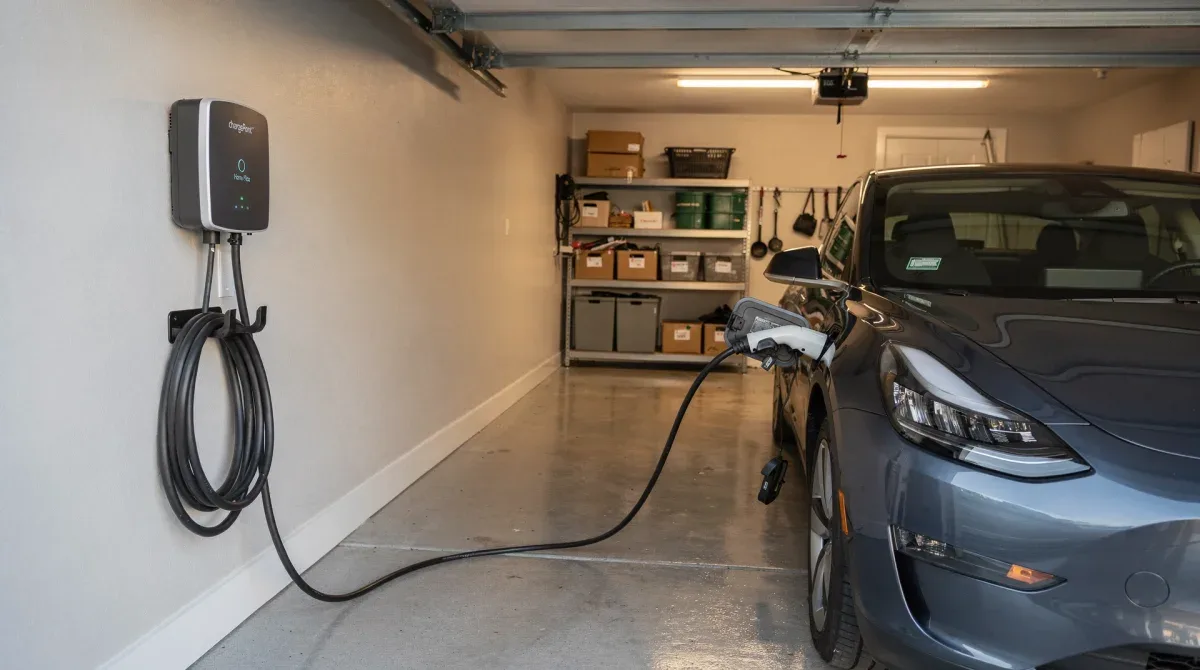
Charging applications can become more useful when they provide clear energy information, flexible scheduling, and straightforward control over supported settings.
Households with multiple electric vehicles may particularly benefit from features that simplify charging routines and help coordinate electricity use without exceeding installation limits.
Future software improvements could increase convenience, but any planned functionality should be treated as a possibility rather than an existing feature until confirmed by the manufacturer.
Conclusion: The Verdict on ChargePoint Home Flex
The ChargePoint Home Flex Level 2 EV Charger Review shows that the product offers flexible charging configurations, a maximum rated output of 50 amps, and connected tools designed for residential EV owners.
Its suitability depends on the home's electrical capacity, professional installation, vehicle charging capabilities, and the owner's interest in scheduling and energy monitoring features. These practical considerations matter more than maximum power alone.
Although a 100-cycle test at 50 amps would provide valuable durability evidence, the available source material does not establish that such a test was performed or verify the claimed 97% efficiency. Buyers should rely on documented specifications and independently measured results when available.
Key Point | Brief Description |
|---|---|
Performance | Maximum rated output is 50 amps at 240 volts, equivalent to 12 kW under suitable installation conditions. |
Reliability | Results from 100 charging cycles have not been independently documented in the available source material. |
Smart Features | The ChargePoint app supports charging schedules, reminders, and available charging activity information. |
Durability | The charger supports indoor and suitable outdoor installation, but long-term durability requires actual operating evidence. |
Frequently Asked Questions About the ChargePoint Home Flex
How does the ChargePoint Home Flex perform at its maximum 50-amp output?▼
The Home Flex is rated for up to 50 amps at 240 volts, delivering a maximum of 12 kW when installed and configured appropriately. Actual charging performance depends on vehicle capabilities and electrical conditions. The available material does not include verified measurements from 100 full-current charging cycles.
Is the ChargePoint Home Flex truly durable for long-term use?▼
The charger is designed for regular residential use and suitable outdoor installation, but a definitive long-term durability assessment requires documented operating results. Product ratings and construction specifications provide useful information without establishing that a particular endurance test was completed successfully.
What smart features does the ChargePoint Home Flex offer for EV owners?▼
The ChargePoint application provides supported features such as charging schedules, reminders, and charging history. Homeowners may use scheduling to take advantage of lower electricity rates where time-based utility pricing is available.
How efficient is the ChargePoint Home Flex Level 2 EV Charger?▼
The available source material does not provide independently verifiable measurements supporting the claimed 97% charging efficiency. Measuring efficiency requires appropriate instruments and a clearly defined method that distinguishes charger consumption from energy ultimately stored in the vehicle battery.
Is the installation of the ChargePoint Home Flex complex for homeowners?▼
Installation should be performed by a qualified electrician who can evaluate available circuit capacity, wiring, protection requirements, and the desired charging current. Plug-in configurations have different output limits from hardwired installations, making professional assessment essential.
What this means
The ChargePoint Home Flex Level 2 EV Charger Review identifies a residential charging solution with adjustable power settings, connected functionality, and a maximum output suitable for compatible vehicles and properly prepared electrical installations.
For homeowners, the most important purchasing considerations include electrical upgrade costs, vehicle charging limits, daily driving needs, and the usefulness of connected features rather than unverified performance claims.
A properly documented 100-cycle endurance test could strengthen the evaluation by measuring consistency, temperature behavior, charging interruptions, and energy consumption. Until such data is available, the manufacturer's verified specifications provide a more reliable basis for understanding the product's capabilities.